
 English
 Español
 Portugues
 Pусский
 Français
 Deutsch
 日本語
日本語 한국어
한국어 العربية
lock nut
A lock nut is a specially designed fastener used to prevent loosening under vibration, rotation, or repeated mechanical stress. Unlike a standard nut, which may gradually come loose over time, a lock nut provides greater resistance to movement and helps maintain a secure connection between threaded components. It is commonly used in machinery, automotive assemblies, construction equipment, electrical installations, and many other applications where stability and reliability are important.The main purpose of a lock nut is to hold parts firmly in place even when exposed to dynamic forces. In many mechanical systems, vibration and shifting loads can cause ordinary nuts to back off from the bolt thread. A lock nut solves this problem by adding friction, deformation, or a special locking feature that increases holding power. Depending on the design, the locking function may come from a nylon insert, an all-metal construction, a distorted thread, or another mechanical locking principle.There are several common types of lock nuts. One widely used type is the nylon-insert lock nut, often known for its ring of nylon inside the nut. When tightened onto a bolt, the nylon section grips the threads and creates friction, helping to prevent loosening. Another type is the all-metal lock nut, which relies on metal-to-metal contact and thread deformation to achieve locking strength. These versions are often preferred in high-temperature environments where nylon may not perform well. There are also flange lock nuts, which include a built-in flange to distribute load and improve resistance against loosening. Each type serves different requirements depending on the working conditions.Lock nuts are valued for their durability, ease of use, and dependable performance. They can be installed with standard tools and do not usually require complicated procedures. In many cases, they provide a simple yet effective solution for improving joint security. Because they reduce the need for frequent maintenance and re-tightening, lock nuts can help improve efficiency and reduce downtime in industrial and mechanical systems.Material selection is also important. Lock nuts are commonly made from steel, stainless steel, or other alloys to provide strength and corrosion resistance. Surface treatments such as zinc plating or other protective coatings may be added to improve longevity in harsh environments. The choice of material often depends on load conditions, exposure to moisture, temperature, and the desired service life.In summary, a lock nut is an essential fastening component designed to resist loosening and ensure long-term stability. Its various designs and materials make it suitable for a wide range of applications, from everyday equipment to demanding industrial machinery. By providing a secure and reliable connection, lock nuts play an important role in safety, performance, and maintenance reduction.
उत्पाद
वर्गीकरण:
-
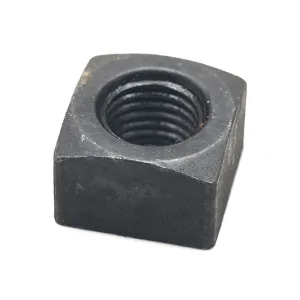
Nut
उनका वर्गीकरण: कड़े छिलके वाला फलदृश्य: 326संख्या:रिलीज का समय: 2026-07-21 09:36:07Port:Port NINGBO Payment Terms:L/C,D/A,D/P,T/T OEM number :7H3607 OEM number :7H3608 OEM number :7H3609 OEM number :2M5656 OEM number :180301824
समाचार
वर्गीकरण:
कोई खोज परिणाम नहीं!
मामला
वर्गीकरण:
कोई खोज परिणाम नहीं!
वीडियो
वर्गीकरण:
कोई खोज परिणाम नहीं!
डाउनलोड
वर्गीकरण:
कोई खोज परिणाम नहीं!
भरती
वर्गीकरण:
कोई खोज परिणाम नहीं!
अनुशंसित उत्पादों
कोई खोज परिणाम नहीं!



 Whatsapp
 टेलीफ़ोन